The Power of Bedtime Stories: How 10 Minutes a Night Builds Your Child's Brain
Think back to your own childhood for a moment.
Chances are, you still remember at least one bedtime story someone told you. Maybe it was a fairy tale, a family favorite, or a story your grandparent repeated so often that you knew every line by heart.
You may not remember every toy you owned or every outfit you wore, but those stories somehow stayed.
Why?
Because stories are more than words. They are experiences. They create emotions, spark imagination, and leave lasting impressions on the developing brain.
Now pause for a moment and ask yourself:
When was the last time you read a bedtime story to your child?
The Surreal Magic of Shared Storytelling

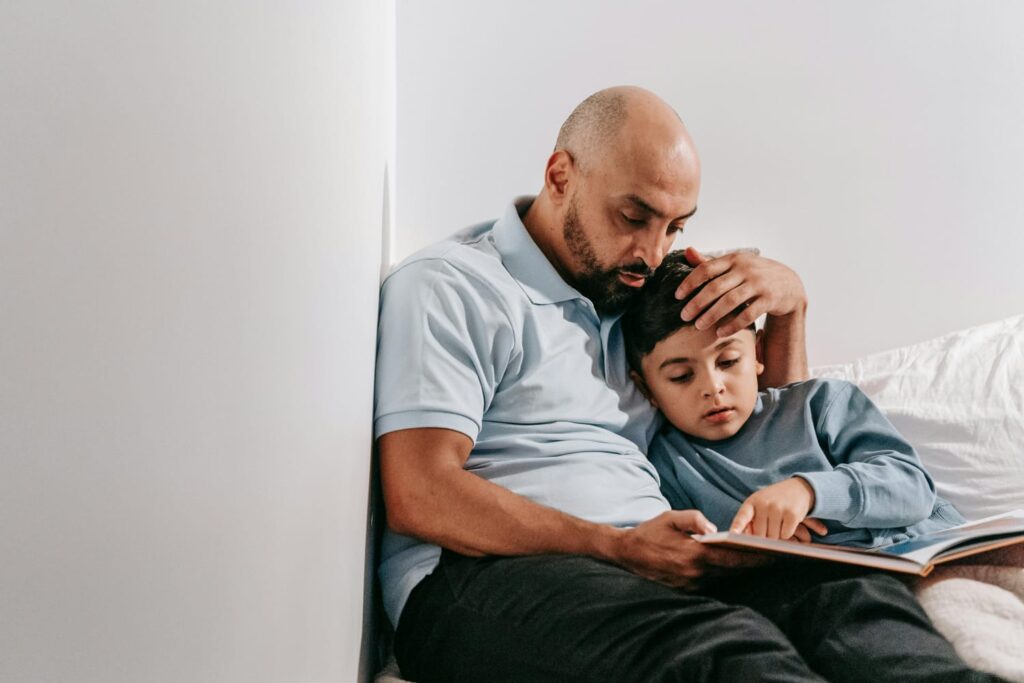
If your answer is yes, you are already familiar with the surreal magic of those moments. Opening a book together at the end of a long day and entering an imaginary world side-by-side is a completely unique experience.
Passing down your childhood favorites feels incredible—it is the exact same tale you once listened to, but now it flows through your voice, with your own adult emotions woven into the fabric.
What is even more fascinating is the nature of today’s generation. Children today are remarkably curious, highly expressive, and intensely analytical. Their spontaneous questions, unexpected giggles, and unique perspectives transform even the simplest traditional fable into a much richer, collaborative experience.
If your answer is no, you’re not alone. Modern life is busy. Evenings disappear between homework, dinner, activities, and screens. But in the rush of everyday life, many families unknowingly miss one of the simplest and most powerful brain-building activities available to them.
Bedtime stories are far more than a tool for quiet time or entertainment. They are a gateway to imagination, emotional regulation, and a psychological safe space for dreaming.
For those parents who were never told stories as children, it is a genuine experiential loss. But there is no reason to let that cycle continue. While stories are everywhere today—accessible via books, audiobooks, and tablets—the ultimate developmental secret lies in human connection.
Do not simply delegate this routine to a digital screen. The deepest developmental impact comes directly from you narrating. Your natural pauses, your shifting tone, and the way you manually shape the emotional arc of the narrative are what make the memory permanent.
At Bridge My Brain, I often tell parents that bedtime stories are not just a tradition.
They are one of the most effective tools for developing language, memory, emotional intelligence, creativity, and connection.
And the best part?
They only take a few minutes.

Why Bedtime Stories Matter More Than We Think
Many parents see storytime as a calming bedtime routine.
And it certainly is.
But beneath the surface, something much bigger is happening.
Every story activates multiple areas of a child’s brain at the same time.
While your child is listening, their brain is:
- creating mental images
- processing language
- making predictions
- understanding emotions
- strengthening memory pathways
- building attention skills
- connecting new ideas with existing knowledge
In other words, storytime is a complete brain workout disguised as quality time.
The 5 Pillars of Story-Driven Brain Development
1. Stories Strengthen Parent-Child Connection
Before we talk about learning, let’s talk about something even more important.
Connection.
Children learn best when they feel safe, loved, and connected.
A bedtime story creates exactly that environment.
When you sit beside your child, put away distractions, and give them your full attention, you send a powerful message:
“You matter.”
Your voice becomes a source of comfort.
Your presence becomes a source of security.
And that feeling of safety helps the brain relax and become more receptive to learning.
In many ways, bedtime stories become a natural form of “serve and return” interaction.
Your child asks a question.
You respond.
They predict what happens next.
You build on their idea.
This back-and-forth exchange strengthens communication, trust, and understanding.
Long after the story is forgotten, the feeling of being connected remains.
2. Stories Build Imagination and Creativity
Unlike screens, stories don’t provide all the answers.
A television show shows children exactly what the castle looks like.
A story asks them to create it themselves.
As you describe characters, places, and events, your child’s brain begins constructing those images internally.
They imagine:
- the giant dragon
- the magical forest
- the talking rabbit
- the brave explorer
Every child creates a slightly different version in their mind.
This process strengthens creativity, visualization, and flexible thinking.
These are not just artistic skills.
They are life skills.
Children use imagination when they:
- solve problems
- generate ideas
- think of alternatives
- innovate
- adapt to change
Today’s bedtime story can become tomorrow’s creative thinking.
3. Stories Grow Language and Communication Skills
One of the easiest ways to expand a child’s vocabulary is through stories.
Books expose children to words and sentence structures they may never hear in everyday conversation.
As children repeatedly hear stories, they naturally learn:
- new vocabulary
- sentence patterns
- storytelling structure
- conversational skills
- listening skills
They also begin understanding how language works.
This has a direct impact on reading, writing, comprehension, and academic learning later on.
But language development isn’t only about new words.
It’s also about learning how to express thoughts and emotions.
Many children find it easier to discuss feelings through stories.
A character’s fear, excitement, disappointment, or courage often becomes a safe way for children to understand their own emotions.
4. Stories Improve Memory and Attention
Many parents worry about memory.
“My child forgets everything.”
“They studied yesterday and can’t remember today.”
“What can I do to improve recall?”
Interestingly, bedtime stories naturally strengthen many of the skills involved in memory development.
When children follow a story, they need to remember:
- who the characters are
- what happened earlier
- the sequence of events
- clues and connections
Each of these processes strengthens memory pathways.
Stories also encourage sustained attention.
Unlike fast-moving digital content, stories require children to stay mentally engaged over time.
They learn to listen, process, connect, and anticipate.
These skills support learning far beyond storytime.
5. Stories Develop Emotional Intelligence
Children may not experience every challenge personally, but stories allow them to experience many situations safely.
Through characters, they learn about:
- friendship
- kindness
- courage
- disappointment
- persistence
- empathy
- forgiveness
Stories become emotional rehearsals for real life.
When a character faces a challenge, children begin asking:
- What would I do?
- How would I feel?
- Was that fair?
- Could there have been another solution?
These reflections help children understand both themselves and others.
In a world where emotional resilience matters as much as academic success, this is a gift that lasts a lifetime.

How to Make Storytime More Powerful
The good news is that you don’t need special training, expensive books, or dramatic storytelling skills.
A few small changes can make storytime even more meaningful.
1. Make the Story Your Own
Don’t worry about reading every word perfectly.
Use different voices.
Add expressions.
Pause for suspense.
Laugh together.
Stories are meant to be experienced, not performed perfectly.
2. Encourage Questions
If your child interrupts, that’s not a problem.
That’s learning.
Questions show curiosity, engagement, and active thinking.
Welcome them.
3. Connect Stories to Real Life
Ask:
- Have you ever felt like this character?
- What would you have done?
- Does this remind you of something?
These conversations deepen understanding and memory.
4. Focus on Consistency
Ten minutes every day is far more powerful than one long session once a week.
Small, repeated experiences build stronger neural pathways over time.
Try This Tonight: Change the Ending
If you’d like to turn storytime into a simple brain exercise, try this.
Read a familiar story.
Then pause near the ending and ask:
“What if the story ended differently?”
Let your child create an alternative ending.
You might be surprised by what happens next.
This simple activity encourages:
- creativity
- flexible thinking
- problem-solving
- sequencing
- communication
Most importantly, children love it.
The Real Magic of Bedtime Stories
Years from now, your child may not remember every lesson you taught.
They may not remember every toy you bought.
They may not remember every outing you planned.
But they are likely to remember the feeling of lying beside you while a story came alive through your voice.
And while they were enjoying that moment, something remarkable was happening.
Their brain was building pathways for imagination.
Their language was growing.
Their memory was strengthening.
Their emotional world was expanding.
And your relationship was becoming stronger.
That is the real power of a bedtime story.
Not perfection.
Not performance.
Just connection, imagination, and learning woven together one page at a time.
At Bridge My Brain, we believe some of the most powerful learning happens in the simplest moments. Bedtime stories are one of those moments—a daily opportunity to build imagination, memory, language, emotional intelligence, and connection, all at once.

Final Thoughts
The legendary author J.K. Rowling once stated, “I will defend the importance of bedtime stories to my last gasp.”
Pause for a moment and think about that.
What if she had never grown up surrounded by stories?
Would the world have ever experienced the magic of Harry Potter?
Perhaps.
Perhaps not.
But what we do know is this: stories shape the way children think, imagine, feel, and dream.
So tonight, close the laptop a little earlier.
Pick up a book.
Cuddle close.
Read one story.
Then maybe one more.
Because story time is never just about reading words on a page.
It is about building imagination, strengthening the brain, creating emotional safety, and making memories that last far beyond childhood.
One story.
One conversation.
One bedtime at a time.
Ready to Build Stronger Learning Foundations?
At Bridge My Brain, I help children strengthen the cognitive skills that support lifelong learning—including focus, memory, comprehension, creativity, and emotional confidence.
Through differential learning, brain-based activities, and personalized developmental pathways, every child is supported according to how they learn best.
If you would like to explore how to nurture your child’s unique strengths, I’d love to connect.