
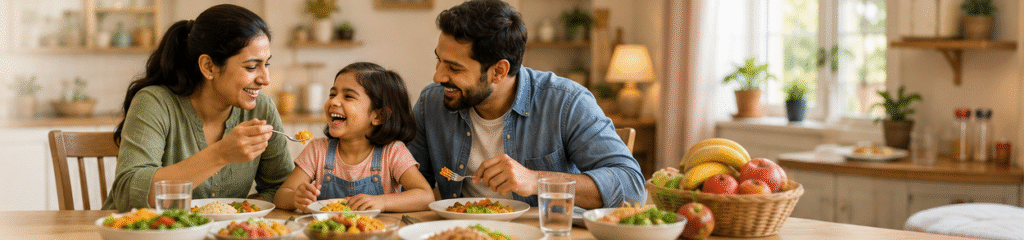
"My Child Doesn't Eat!" How to Build a Healthy Relationship with Food (Without Turning Every Meal Into a Battle)
Every Meal Doesn’t Have to Feel Like a Battle
“Just one more bite.”
“Please finish your food.”
“If you eat this, I’ll give you chocolate.”
“Watch one more cartoon while I feed you.”
If you’re a parent, chances are you’ve said at least one of these.
And if you have, you’re certainly not alone.
One of the most common concerns parents share with me isn’t about homework or exams—it’s about food.
“My child doesn’t eat vegetables.”
“My child only wants junk food.”
“Meals take an hour.”
“They won’t eat unless the TV is on.”
“I feel like I’m negotiating at every meal.”
Over time, mealtimes become stressful for everyone involved. Parents worry their child isn’t eating enough. Children begin associating the dining table with pressure, bargaining, or conflict.
But what if eating isn’t the real problem?
What if the relationship with food is?
At Bridge My Brain, I believe that healthy eating begins long before the first bite. It begins with the emotions, experiences, and associations children build around food every single day.
The goal isn’t to make children eat more.
The goal is to help them enjoy eating, trust their body’s signals, and develop habits that stay with them for life.
Every meal is more than nutrition.
It’s one of the few moments in a child’s day where they learn to listen to their body, make choices, wait patiently, explore with their senses, and connect with the people around them.
When we begin to see meals as learning experiences instead of feeding sessions, many of our parenting decisions naturally begin to change.
Why Food Becomes a Battle
Children are born with an incredible ability to regulate hunger and fullness.
Some days they’ll eat more.
Some days they’ll barely touch their plate.
This is often completely normal.
Yet, as loving parents, our anxiety can unintentionally change the experience.
We begin:
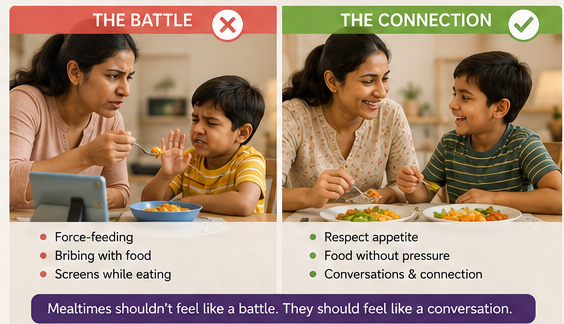
- persuading
- forcing
- distracting
- negotiating
- bribing
- comparing with other children
Eventually the meal stops being about nourishment.
It becomes about control.
Children naturally resist control.
The more pressure they feel, the less interested they become in eating.
Ironically, the harder we try to make them eat, the harder eating becomes.
The Food Messages Children Learn Without Us Realising
Children don’t only learn what food tastes like.
They learn what food means.
When sweets become rewards…
Vegetables become punishments.
When chocolate is earned…
Healthy meals become obstacles.
When screens accompany every meal…
Food becomes background noise.
When parents constantly worry…
Children begin worrying too.
Long before children understand nutrition, they understand emotions.
And emotions shape eating habits far more than rules.
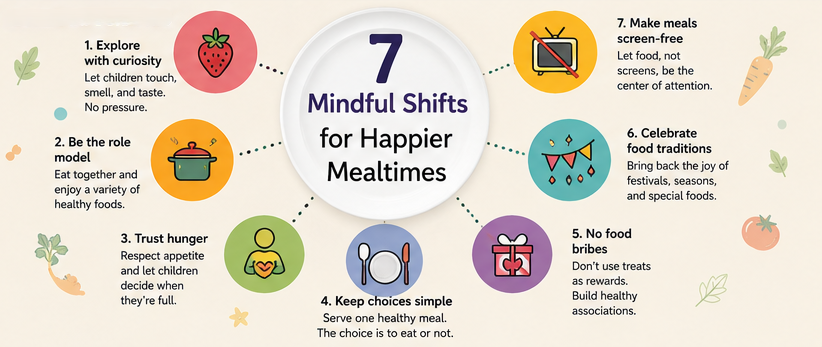
Seven Mindful Shifts That Can Transform Mealtimes
Instead of fighting with food, let’s rebuild the relationship.
Shift 1: Make Food an Adventure, Not an Obligation
Children are naturally curious.
Instead of saying,
“Eat your carrots.”
Try saying,
“Look how orange these are.”
“What do they smell like?”
“Which one is crunchier?”
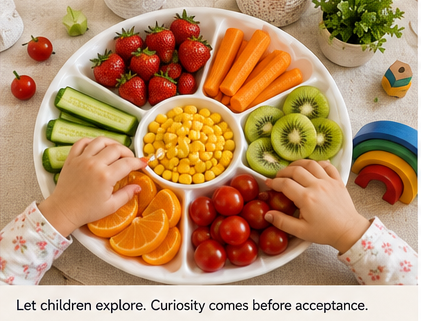
Let children:
- touch
- smell
- compare
- arrange
- taste when ready
Exploration comes before acceptance.
Curiosity often succeeds where pressure fails.
Shift 2: Become the Role Model
Children copy far more than they obey.
If vegetables only appear on your child’s plate while everyone else enjoys something different, they immediately sense that healthy food is a chore.
Instead…
Eat together.
Show genuine enjoyment.
Talk about flavours instead of health lectures.
Sometimes playful reverse psychology works beautifully.
“This mango is so sweet… I’m not sure I want to share it.”
Suddenly, the forbidden fruit becomes very interesting.
Shift 3: Trust Hunger
One of the hardest lessons for parents is learning to trust their child’s appetite.
Healthy children rarely choose to starve themselves.
Some meals will be bigger.
Others will be lighter.
Avoid chasing every bite.
Allow hunger to do its job.
Children who experience natural hunger are much more likely to listen to their own body rather than external pressure.
Shift 4: Keep Choices Simple
Too many options overwhelm children.
“What do you want?”
“Pasta?”
“Rice?”
“Noodles?”
“Sandwich?”
Instead, prepare one balanced family meal.
Your child can decide:
“I’ll eat.”
or
“I’m not hungry right now.”
That small choice builds independence while reducing constant negotiations.
Shift 5: Stop Using Food as a Reward
One of the strongest food messages children receive is:
Vegetables = Work
Dessert = Happiness
Unfortunately, this teaches children that nutritious food is something to survive before reaching the “good” food.
Instead of saying,
“Finish your vegetables and then you get ice cream.”
Try allowing treats to exist occasionally without attaching them to performance.
Food shouldn’t become currency.
Shift 6: Bring Back the Joy of Seasonal Eating
Years ago, sweets and fried foods were celebrations.
They carried anticipation.
Today they’re often everyday foods.
Children stop appreciating what is always available.
Celebrate festivals.
Cook together.
Visit fruit markets.
Talk about seasonal produce.
Let food tell stories.
A mango isn’t just a fruit.
It’s summer.
A modak isn’t just dessert.
It’s tradition.
Food becomes richer when it carries memories.
Shift 7: Make Mealtimes Screen-Free—One Conversation at a Time
Perhaps the biggest challenge today isn’t picky eating.
It’s distracted eating.
When children eat while watching a screen, several important things disappear:
- awareness of hunger
- awareness of fullness
- family conversations
- eye contact
- sensory experience
The brain becomes focused on the screen instead of the meal.
Over time, children stop noticing what—and how much—they are eating.
The good news?
Screens don’t need to disappear overnight.
They simply need replacing.
Replacing Screens Without Creating Another Battle
If every meal has involved a screen, removing it suddenly may create resistance.
Instead, transition gradually.
Week 1
Turn the screen off for the first five minutes.
Then continue as usual.
Week 2
Keep one meal each day completely screen-free.
Breakfast often works well because everyone is fresher.
Week 3
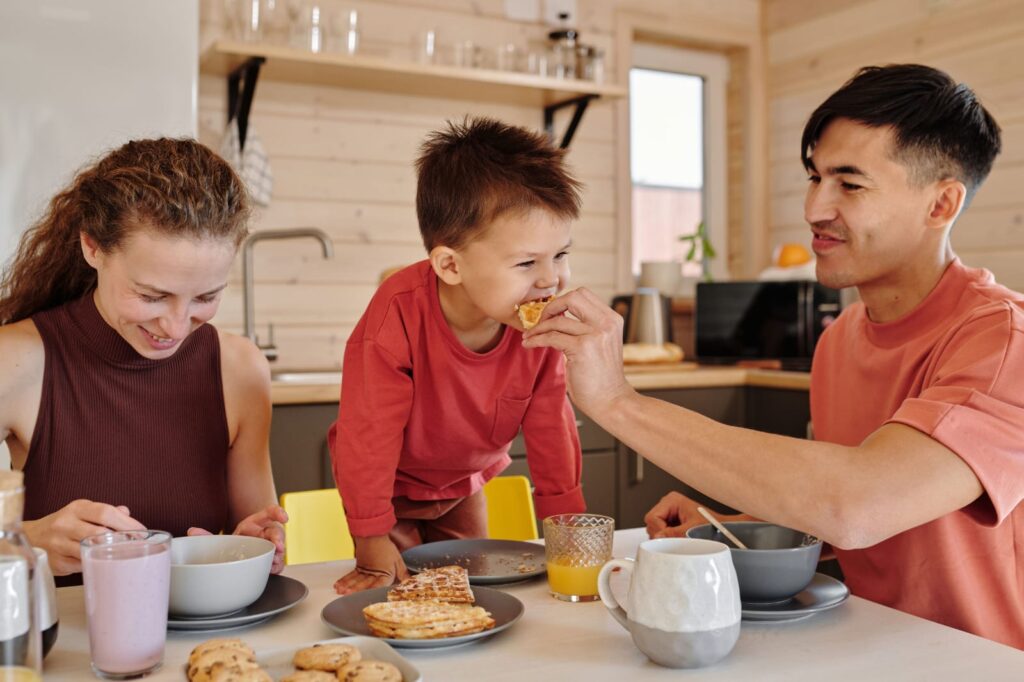
Introduce conversation starters.
Try questions like:
“What made you laugh today?”
“If you could invent a new fruit, what would it look like?”
“What colour best describes your day?”
“Would you rather fly like a bird or swim like a dolphin?”
Children usually enjoy these far more than another cartoon.
Week 4
Replace some screen time with storytelling.
You don’t even need a book.
Tell:
- stories from your own childhood
- funny family memories
- made-up adventures
- unfinished stories your child can complete
Storytelling strengthens imagination, vocabulary, listening, and emotional connection—all while making meals something children look forward to.
Other Screen-Free Mealtime Ideas
Keep a small jar beside the dining table filled with conversation cards.
Play simple observation games:
“I spy something green.”
Take turns sharing:
- one grateful moment
- one funny moment
- one new thing learned today
Ask children to rate the meal like restaurant critics.
Invite them to describe flavours using unusual words.
The goal isn’t entertainment.
It’s connection.
The Bigger Picture
Food isn’t just fuel.
It’s culture.
It’s conversation.
It’s comfort.
It’s family.
It’s memory.
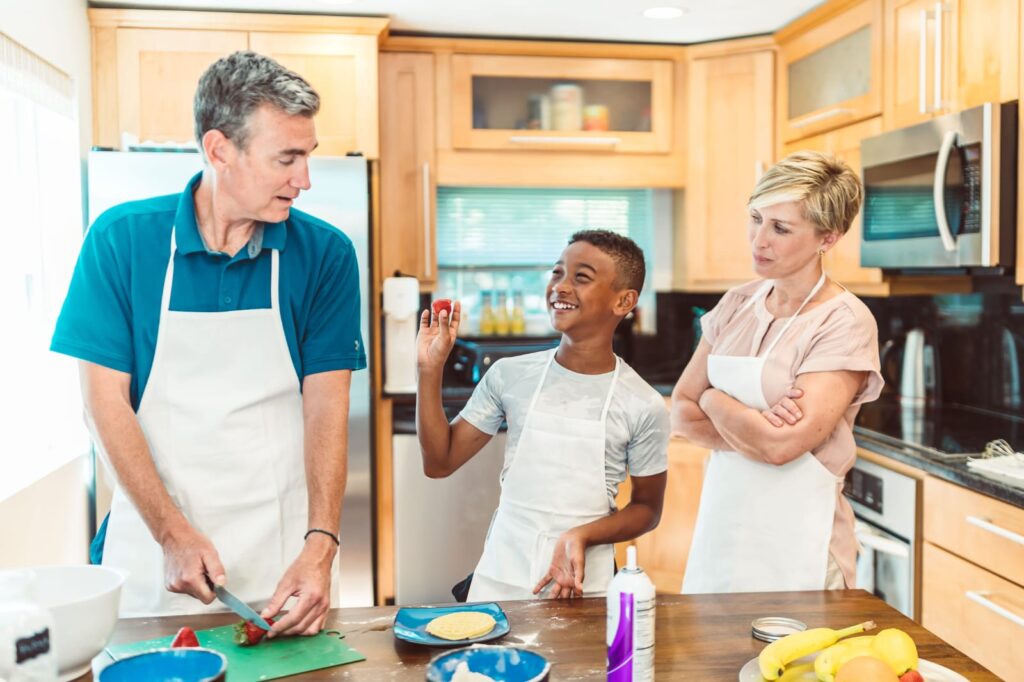
Long after children forget what was served for dinner, they’ll remember how dinner felt.
Did they feel rushed?
Judged?
Forced?
Or welcomed?
Safe?
Heard?
Included?
These memories quietly shape their relationship with food for years to come.
Final Thoughts
The next time you find yourself saying,
“My child doesn’t eat,”
pause for a moment.
Instead of asking,
“How do I make my child eat?”
perhaps ask,
“How can I make food feel positive again?”
Sometimes the answer isn’t a new recipe.
It isn’t another nutrition chart.
It isn’t one more bite.
Sometimes it’s a conversation.
A shared laugh.
A family story.
Or simply sitting together without a screen between you.
At Bridge My Brain, I believe that learning happens everywhere—including around the dining table. Mealtimes are one of childhood’s most overlooked learning environments.
They nurture communication, curiosity, independence, emotional regulation, confidence and lifelong habits—often without us even noticing.
A Small Challenge for This Week
Choose just one meal to make completely screen-free.
Replace the screen with a story, a question, or simply a conversation.
You may be surprised to discover that the most nourishing part of the meal wasn’t the food on the plate—it was the connection shared around it.