Why Learning Feels Broken — And How We Can Fix It Together
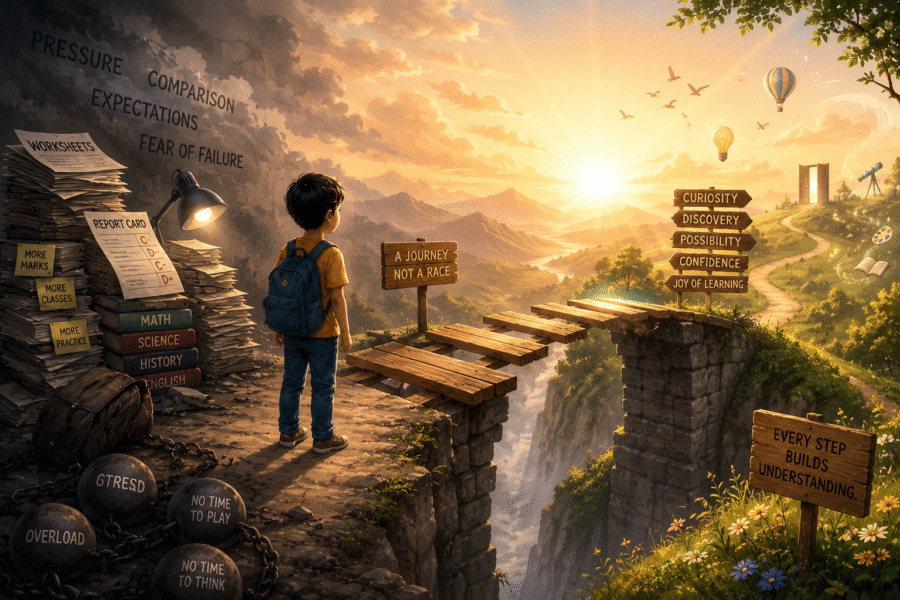
Parents are exhausted.
Teachers are overwhelmed.
Students are stressed.
Even though everyone seems to be working harder than ever.
So why does learning still feel so difficult?
Perhaps the problem isn’t effort.
Perhaps it’s the way we’ve come to think about learning itself.
When Learning Becomes Performance
Many children spend years memorizing information, only to forget much of it shortly after an exam.
They learn to prepare for tests.
To complete assignments.
To achieve grades.
But somewhere along the way, many lose something far more valuable:
Their curiosity.
Learning begins to feel less like discovery and more like survival.
The question shifts from:
“What can I learn?”
to
“What do I need to remember to get through this?”
The Hidden Cost
When learning becomes focused on performance alone, several things begin to happen.
Children become afraid of mistakes.
Comparison replaces curiosity.
Confidence becomes dependent on results.
And learning starts to feel unsafe.
A child who is constantly worried about being wrong stops exploring.
A child who is constantly compared stops taking risks.
A child who feels judged stops asking questions.
The very things that help the brain learn become the things children avoid.
What the Brain Actually Needs
The brain learns best when three things come together:
Emotion
Learning is stronger when children feel safe, encouraged, and supported.
Relevance
Learning becomes meaningful when children understand why something matters and how it connects to their lives.
Repetition
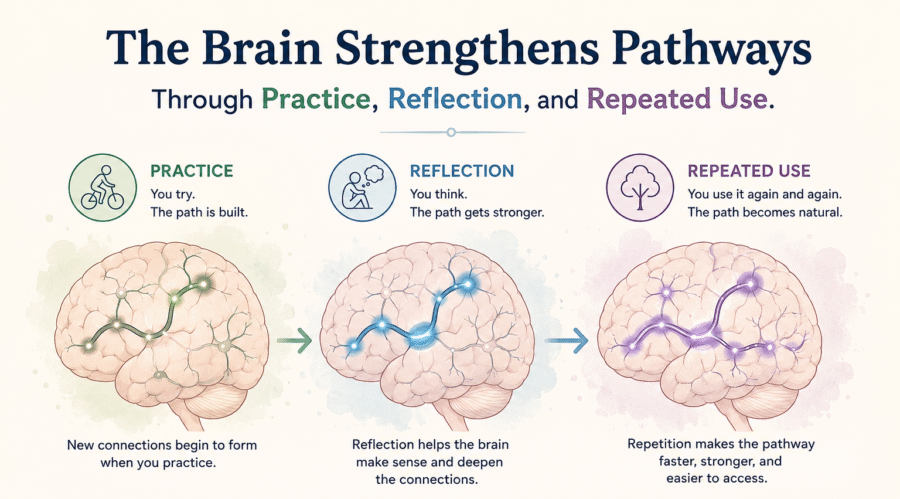
The brain strengthens pathways through practice, reflection, and repeated use.
These three elements work together to create lasting learning.
Without them, information may be remembered temporarily.
With them, understanding begins to grow.
Why Struggle Isn’t the Problem
One of the biggest misconceptions about learning is that struggle means something is wrong.
In reality, struggle is often a sign that the brain is building something new.
Mistakes provide information.
Questions create connections.
Practice strengthens pathways.
Children don’t struggle because they’re incapable.
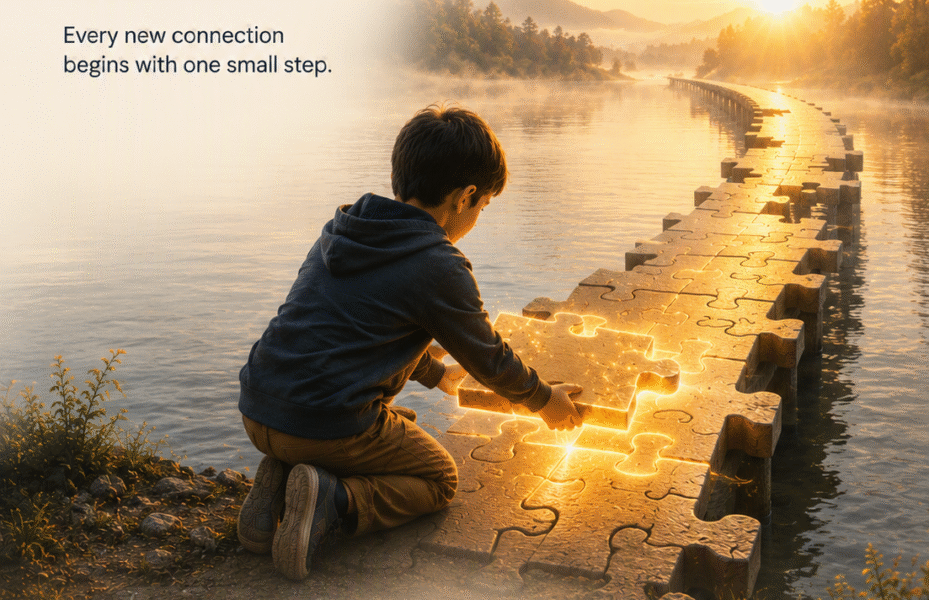
They struggle because they’re still building the bridge.
What We Can Do Differently
The solution isn’t removing challenge.
The solution is changing the experience around challenge.
We can create learning environments that are:
- Emotionally safe
- Curious rather than fearful
- Focused on understanding rather than memorization
- Supportive of mistakes and experimentation
We can help children see learning as a process instead of a performance.
Parents, Teachers and Children Are On The Same Team
Parents want their children to succeed.
Teachers want their students to learn.
Children want to feel capable.
The goal isn’t for one group to work harder than the others.
The goal is for everyone to move in the same direction.
When learning becomes a partnership rather than a pressure system, remarkable things happen.
The Bridge We Need To Build
At Bridge My Brain, we believe learning is more than information.
It’s an experience.
It’s a relationship.
It’s a process of building connections inside the brain and confidence inside the child.
Because the bridge isn’t from information to learning.
It’s from experience to understanding.
And when children understand, they don’t just remember more.
They enjoy learning again.
Tonight, try asking your child:
“What did you enjoy learning today?”
instead of
“What did you study today?”
The answer may tell you more than you expect.