The Hidden Power of Boredom: Why “Doing Nothing” Builds a Thinking Brain
How stillness, imagination, and the brain’s Default Mode Network work together in child development.

“The next time your child says, ‘I’m bored,’ don’t rush to fix it.”
We often see boredom as a gap to be filled.
So we step in quickly— with activities, classes, suggestions, or screens.
Not because we’re doing something wrong, but because we’ve been conditioned to believe:
If a child isn’t engaged, they’re falling behind.
But what if boredom isn’t a problem to solve… what if it’s exactly what the brain needs?
Why We’re Uncomfortable With Boredom
A child doing nothing can feel unsettling.
It looks unproductive. It feels like wasted time.
And sometimes, if they’re not occupied, it asks something from us—our time, our attention.
So we move to fix it.
“Do this.”
“Try that.”
“Don’t just sit…”
It feels helpful.
But something important often gets interrupted there.
Because the brain doesn’t always look busy when it’s doing important work.
What Science Actually Shows
When the brain appears to be “at rest,” it is far from inactive.
This is when the brain’s Default Mode Network (DMN) becomes active.
The DMN is linked to:
- Daydreaming
- Internal reflection
- Connecting ideas
- Creative thinking
- Meaning-making
In simple terms:
When nothing is happening outside, the brain finally has room to work inside.
This is often the phase where the brain:
- Organises what it already knows
- Makes unexpected connections
- Begins shifting from consuming to creating
From the outside, it still looks like “nothing.”
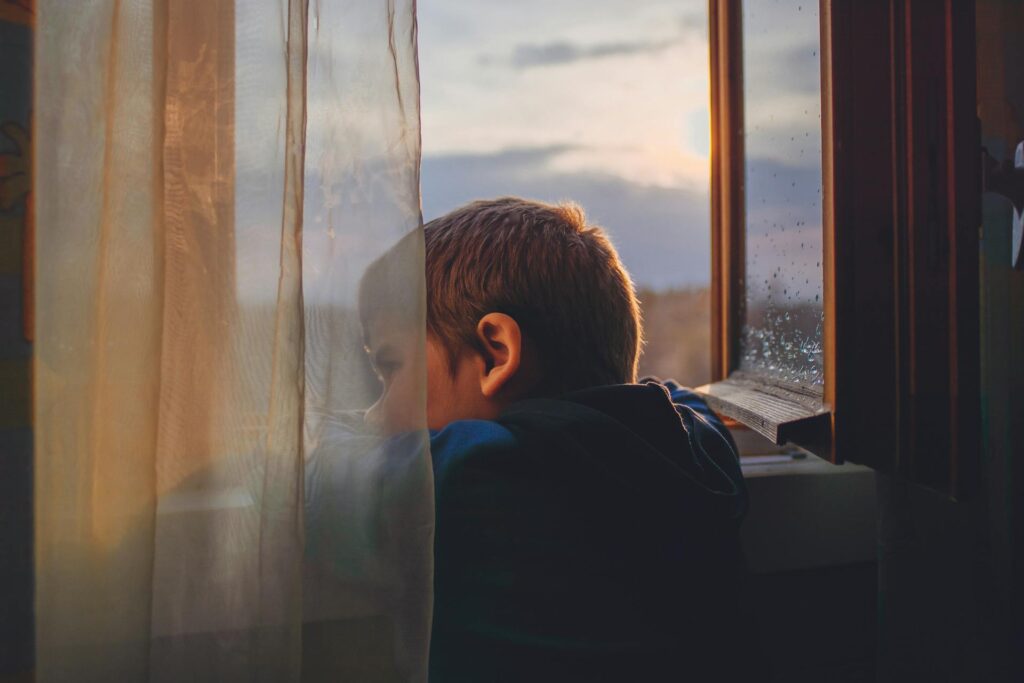
A child staring at clouds. Lying on the floor. Quietly wandering in thought.
But this is often where imagination begins.
Why Constant Activity Backfires
When children are constantly engaged— classes, tasks, structured activities, screens, instructions— the brain stays in input mode.
It processes.
It responds.
It completes.
But it doesn’t get enough space to:
- Wander
- Imagine
- Reflect
- Generate something new
The more every gap gets filled, the less room the brain has to explore internally.
And over time, children can begin depending on constant stimulation instead of learning how to create from within.
Boredom Is Not Empty
Boredom is not a dead space.
It’s a transition.
From:
- Waiting → Wondering
- Receiving → Generating
- External stimulation → Internal imagination
This is where:
- Stories begin
- Ideas connect
- Questions emerge
- Independent thinking develops
It may look small. It may look slow.
But it matters.
What Boredom Builds Over Time
When children experience healthy unstructured downtime, they gradually develop:
Imagination
Children begin inventing their own games, stories, and possibilities.
Self-Regulation
They learn to sit with discomfort instead of escaping it immediately.
Patience
The brain stops depending on constant novelty.
Independent Thinking
Children begin generating instead of waiting to be entertained.
These are not instant outcomes.
They build quietly, over time.
How to Support “Good Boredom” at Home
You don’t need a complicated plan.
Just small shifts.
1. Create Device-Free Pockets
Allow moments where the brain experiences silence without instant stimulation.
2. Leave Space for Unstructured Play
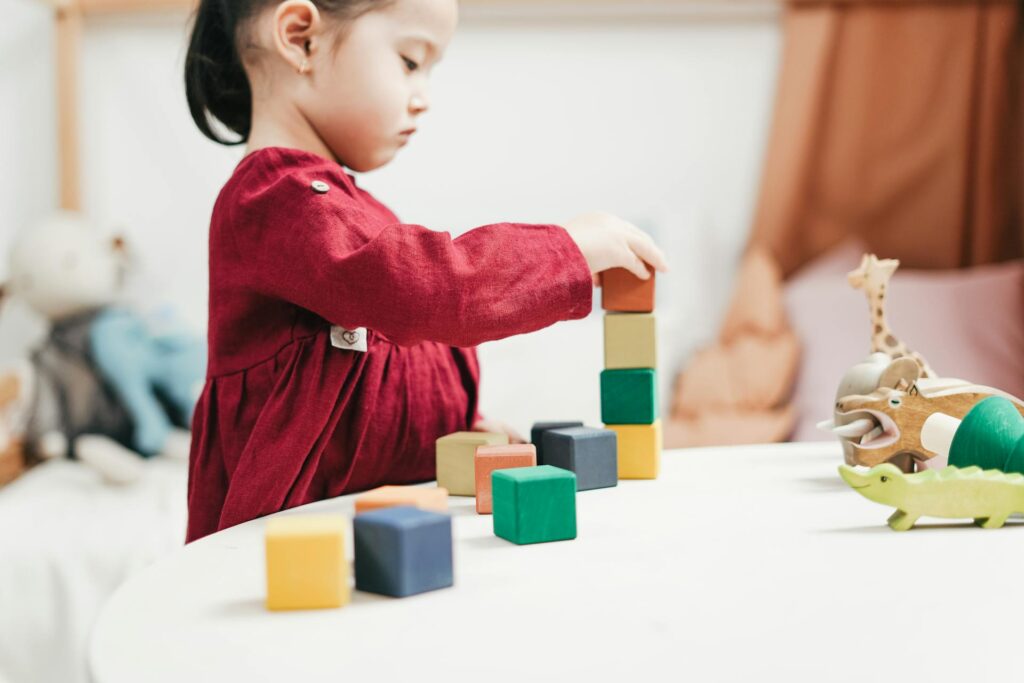
Keep simple materials nearby—paper, crayons, blocks, music, art supplies—but avoid directing the outcome.
3. Let Nature Slow the System
Clouds, trees, birds, evening walks, open skies—simple sensory experiences naturally reduce mental overload.
4. Pause Before Solving “I’m Bored”
Wait a little longer than usual.
Not every empty moment needs filling immediately.
5. Model Stillness Yourself
Let children occasionally see you enjoying quiet moments too—reading, journaling, observing, sipping tea in silence.
Children don’t only learn from instruction. They absorb nervous system patterns.
A Small Reframe
The next time your child says, “I’m bored”…
Pause.
You may be witnessing a transition the brain actually needs.
Not everything empty needs to be filled.
Some spaces are meant to become something.
Closing Thought
At Bridge My Brain, we believe learning doesn’t only happen through activity.
Sometimes, it begins in the pause.
Bridge the pause.
Thinking begins.