Debunked: 5 Learning Myths That Are Harming Your Child's Brain (And How to Rewire Them)

As parents, we’ve all done this at some point:
We try to follow the advice we grew up with…
We compare our child with others (even when we don’t want to)…
We push a little more… nag a little more… worry a little more…
And then the guilt arrives:
“Am I being too lenient?”
“Or too strict?”
“Why does my child struggle when other kids seem fine?”
“Is something wrong with the way I’m teaching them?”
Please hear this with gentleness:
Your child is not the problem.
The myths you were taught about learning are.
For years, parents have been handed outdated, fear-based advice that does not match how a child’s brain actually develops.
Let’s rewrite the narrative — with science, compassion, and a far healthier path for your child’s confidence.
Below are the five biggest learning myths I see in almost every home — and how to rewire them into practices that truly support your child.
MYTH 1: “If my child can’t sit still, they can’t learn.”
The Myth
“My child won’t sit in one place… they keep fidgeting… how will they ever concentrate?”
We imagine learning as something that happens quietly at a desk.
If a child fidgets, wiggles, taps, or shifts — we assume they’re distracted or not trying hard enough.
This belief often leads to frustration:
“Just sit properly.”
“Stop moving and focus.”
“Why can’t you stay still for five minutes?”
The Truth
Movement isn’t the enemy of learning.
Movement supports learning.
Children’s brains need —
-
- sensory input
- physical grounding
- rhythmic movement
- touch and exploration
Why the brain loves movement
Movement increases:
-
- regulate the nervous system
- increase oxygen + blood flow
- anchor new information
- prefrontal cortex activity (focus)
- hippocampal activation (memory)
- dopamine release (motivation)
- cross-hemispheric communication (integration)
This is why some children walk while memorizing, hum while solving problems, or doodle while listening.
Their body is helping their brain focus.
Fidgeting is often the child’s natural attempt to self-regulate.
A still body does not guarantee a focused brain. But a regulated body often does.
When adults say “Sit still and focus,” we unknowingly ask children to learn against their biology.
The Rewire
Instead of asking your child to “sit still,” ask:
“What does your body need right now to help your brain focus?”
Try:
-
- movement breaks every 8–10 minutes
-
- cross-lateral activities (cross-crawls, hand-to-knee marching)
-
- fidget tools (a stress ball, clay, resistance bands on the chair)
-
- alternate positions (on the floor, standing, kneeling)
-
- rhythm-based tasks (clapping patterns, tapping sequences)
A calm mind learns better — and sometimes, movement is what creates that calm.
MYTH 2: “Learning only happens through textbooks and school.”
The Myth
We’ve been conditioned to believe that learning is academic:
books, worksheets, memorisation, tests.
Everything outside this system can look like “wasted time”:
playing, daydreaming, exploring, getting bored, asking endless questions…
Parents worry:
“If they don’t study more, how will they succeed?”
The Truth
Learning does not start at age 3 and end at age 18.
Learning does not come only from books, teachers, and homework.
Textbooks are one of the least efficient ways for a child’s brain to learn.
Children learn through experience, not just information.
Learning happens everywhere. Every minute. Every day.
Neuroscience shows that the strongest neural pathways form when children:
-
- ask a curious question
- observe people
- help you cook
- fold laundry
- play pretend
- fight and make up with a sibling
- negotiate for extra screen time
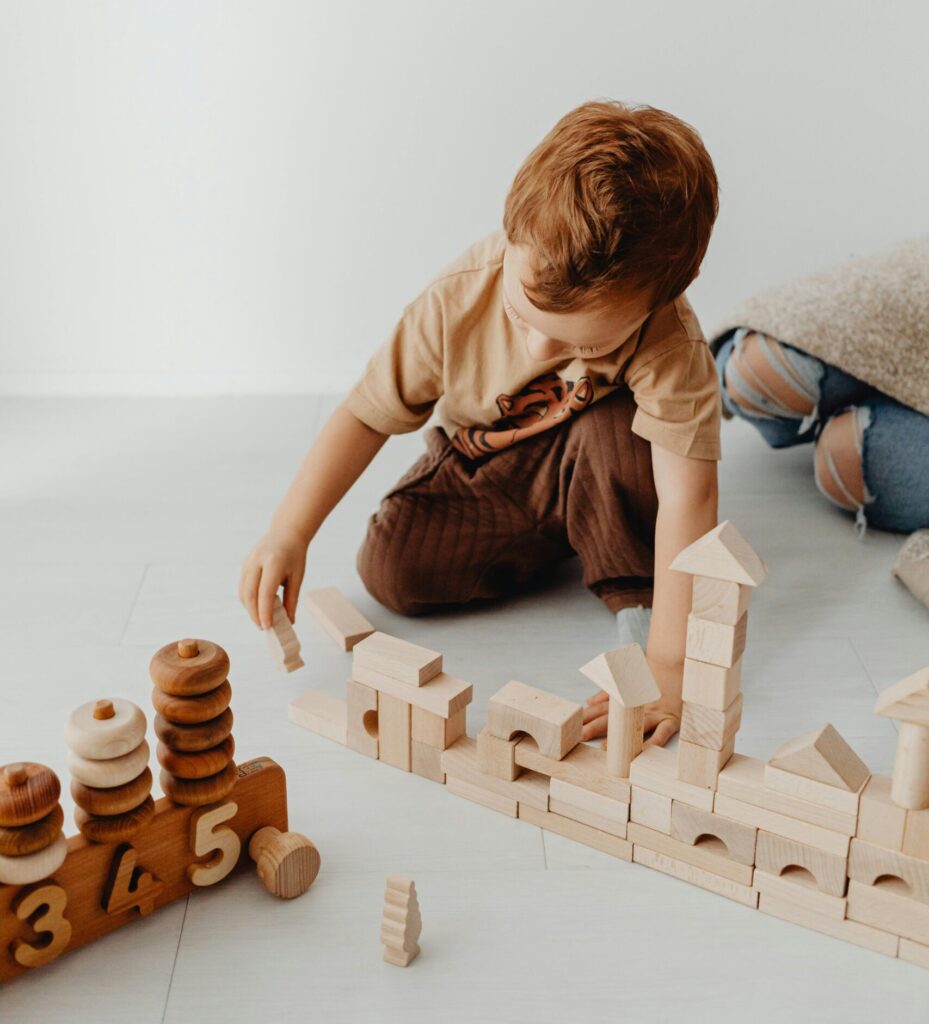
- build blocks
- experiment with crayons
- imagine stories
- explore textures
- solve a problem
- feel an emotion and navigate it
The Rewire
Broaden the definition of learning at home.
Try:
-
- cooking → sequencing + math
-
- gardening → science + responsibility
-
- story-building → language + creativity
-
- board games → logic + working memory
-
- pretend play → social skills + planning
-
- outdoor play → sensory integration + confidence
-
- chores → executive functioning + independence
When you start viewing everyday moments as learning, the pressure drops — and your child’s natural curiosity rises.
MYTH 3: “Pressure and high expectations motivate success.”
The Myth
Parents often feel children need pressure, deadlines, stern talks to perform to their potential hence they must push hard:
“Try harder.”
“You need to focus.”
“You can’t afford to make mistakes.”
“Other kids your age… ”
The intention is love.
The outcome, unfortunately, is stress.
The Truth
Pressure triggers the brain’s stress response, activating the amygdala—which instantly reduces the functioning of the prefrontal cortex, the part responsible for:
-
- focus
- planning
- problem-solving
- memory retrieval
- emotional regulation
A stressed brain cannot learn.
A pressured child may perform temporarily — but long-term learning, confidence, and curiosity decline.
On the other hand, emotional safety activates the parasympathetic system, creating the ideal state for:
-
- sustained focus
-
- flexible thinking
-
- persistence
-
- creativity
-
- healthy risk-taking
-
- deeper memory encoding
Children don’t blossom under pressure.
They blossom under support.
The Rewire
Shift from “performance pressure” to “growth support.”
Try:
-
- replacing criticism with curiosity (“What part felt hard?”)
-
- praising effort and strategies, not results
-
- creating predictable routines to reduce overwhelm
-
- using collaborative problem-solving
-
- validating their emotions before teaching
Speak less like a coach giving instructions…
and more like a partner building confidence.
MYTH 4: “Intelligence is a fixed trait.”
The Myth
Many children grow up hearing:
“You’re smart.”
“You’re weak in math.”
“You’re not creative.”
“You’re slow.”
“This is just how you are.”
These labels may sound harmless, but they shape a child’s identity — and limit how they see themselves.
The Truth
Intelligence is not fixed.
The brain is constantly rewiring itself based on experience, effort, repetition, and emotional safety.
Every time a child practices a skill — even imperfectly — neurons fire and strengthen connections.
This means:
The child who struggles with reading today can become a strong reader tomorrow.
The child who avoids math can learn to enjoy it.
The child who seems “slow” can build speed with the right sensory and neural foundation.
Growth is always happening — but only when the brain feels safe and supported.
The Rewire
Build a growth-safe environment.
Try:
-
- using “yet” (“You don’t get it yet, and that’s okay.”)
-
- celebrating small wins consistently
-
- breaking big tasks into smaller steps
-
- focusing on strategy (“What worked for you here?”)
-
- modelling your own learning (“I’m still figuring this out too.”)
When children believe they can grow, their brain becomes far more willing to try.
MYTH 5: “You must fix the weakness.”
The Myth
Parents often feel pressured to attack the “problem area”:
weak writing → more writing drills
slow processor → more worksheets
poor memory → more revision
low focus → more rules and discipline
This usually leaves the child exhausted and frustrated.
The Truth
Weaknesses rarely improve through direct force.
They improve when the brain becomes stronger overall — especially through the child’s existing strengths.
A child who struggles with sequencing may improve faster through music or storytelling than through sequencing worksheets.
A child who struggles with reading may improve through rhythm, movement, or auditory work — not more reading.
A child who lacks focus may first need sensory regulation, cross-lateral movement, and emotional safety.
The goal isn’t to “fix” the child.
It’s to strengthen the brain systems that support the skill.

The Rewire
Start with strengths.
Use them as the bridge to weaker areas.
Try:
-
- storytelling to improve sequencing
-
- visual supports to improve memory
-
- movement-based tasks to improve focus
-
- art and creativity to strengthen planning
-
- hands-on tasks to build comprehension
-
- rhythm games to enhance processing speed
When strengths lead, weaknesses follow.
Beyond the Myths: Learning With the Brain, Not Against It
When we let go of these myths, something powerful happens:
-
- learning becomes lighter
-
- the home becomes calmer
-
- children become more confident
-
- the brain becomes more flexible
-
- the relationship becomes warmer
And most importantly — the child is finally understood.
At Bridge My Brain, everything I do is built on these truths — regulating the brain, strengthening neural pathways, nurturing curiosity, and empowering parents to understand their child’s learning style without guilt or pressure.
If you’re ready to replace outdated beliefs with a brain-first approach that actually works, this Ultimate Guide is your starting point.
Pingback: Bridge My Brain | Understand Your Child’s Brain & Behaviour